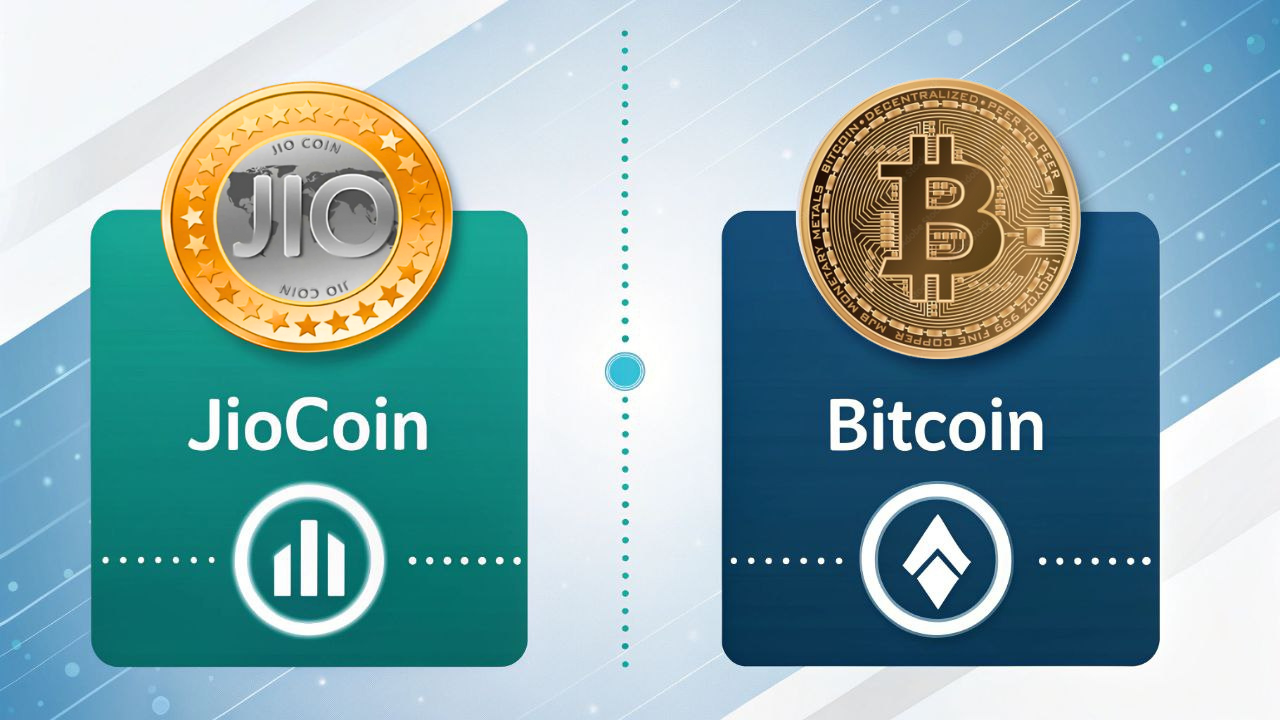
In the dynamic world of cryptocurrencies, new investors often find themselves comparing different digital assets to understand which one aligns with their investment goals and usage needs. Two prominent digital tokens that frequently attract attention are JioCoin and Bitcoin. Bitcoin, often called “digital gold,” is the first and most established cryptocurrency, widely recognized for its role as a store of value. In contrast, JioCoin is Reliance Jio’s native token, developed in collaboration with Polygon Labs, and is deeply integrated within India’s rapidly evolving digital payments ecosystem.
This guide is tailored specifically for beginners. It offers a detailed, side-by-side comparison of JioCoin and Bitcoin, covering their technological foundations, core use cases, market adoption, security features, and long-term potential. By the end of this article, you will have a clearer understanding of the differences between these two digital assets and how each might fit into your investment strategy.
Overview of Jio Coin and Bitcoin
JioCoin Overview:
- Origin and Purpose:
JioCoin is the native digital token of Reliance Jio, created to facilitate secure, fast, and low-cost transactions across its suite of digital services. Initially introduced as a reward mechanism on the JioSphere Browser, it has evolved to power transactions on platforms like JioPay, JioMart, JioCinema, and JioSaavn. - Core Features:
- Fast Transactions: Built on Polygon’s Layer 2 technology, offering high speed and low fees.
- Rewards and Incentives: Earn tokens through digital engagement and redeem them for discounts and cashback.
- Ecosystem Integration: Seamlessly used across multiple Reliance Jio services.
- Security: Robust security measures such as advanced encryption, multi-factor authentication (2FA), and biometric verification.
Bitcoin Overview:
- Origin and Purpose:
Created in 2009 by the pseudonymous Satoshi Nakamoto, Bitcoin is the pioneering cryptocurrency. It is primarily known as a store of value and an investment asset, often compared to gold in its scarcity and decentralized nature. - Core Features:
- Decentralized Network: Operates on a Proof-of-Work (PoW) blockchain that ensures high security and transparency.
- Limited Supply: Capped at 21 million coins, contributing to its scarcity and long-term value proposition.
- Global Acceptance: Widely recognized and used by both retail and institutional investors around the world.
- Security and Transparency: Maintains security through decentralization and a publicly verifiable blockchain, although it is known for higher energy consumption.
Comparative Analysis
Understanding the differences between JioCoin and Bitcoin is key for beginners when deciding which asset suits their needs. Below is a comprehensive comparison based on several critical factors.
A. Technological Foundations
| Aspect | JioCoin | Bitcoin (BTC) |
|---|---|---|
| Blockchain Platform | Built on Polygon’s Layer 2 network for high scalability and low transaction fees. | Operates on its own PoW blockchain, known for decentralization and security. |
| Transaction Speed | Near-instantaneous transactions ideal for everyday payments. | Generally slower during peak times; scalability improvements are ongoing (e.g., Lightning Network). |
| Energy Consumption | Energy-efficient due to Layer 2 technology. | High energy consumption due to PoW mining. |
| Security Measures | Advanced encryption, 2FA, and biometric verification integrated in a controlled ecosystem. | Robust security through decentralization; however, the network is targeted by high-value attacks. |
B. Use Cases and Ecosystem Integration
| Aspect | JioCoin | Bitcoin (BTC) |
|---|---|---|
| Primary Use Case | Digital payments, cashback rewards, and everyday transactions within Reliance Jio’s ecosystem. | Primarily used as a store of value, investment asset, and for large-scale transactions. |
| Ecosystem Integration | Deeply integrated into services like JioPay, JioMart, JioCinema, and JioSaavn. | Globally accepted; integrates with various financial services and exchanges but is not tied to a single ecosystem. |
| Rewards and Incentives | Offers direct rewards for digital engagement and transaction-based incentives. | Lacks an inherent rewards system; relies on market demand and investment sentiment. |
C. Market Adoption and Liquidity
| Aspect | JioCoin | Bitcoin (BTC) |
|---|---|---|
| User Base | Primarily driven by Reliance Jio’s large subscriber network in India. | Global user base with extensive institutional and retail adoption. |
| Liquidity | Growing liquidity as adoption increases, though still relatively localized. | Very high liquidity with numerous global exchanges facilitating large trades. |
| Market Volatility | Subject to volatility, but potential rewards and low fees encourage regular use. | Known for high volatility, though considered a relatively stable store of value over the long term. |
D. Regulatory Environment
| Aspect | JioCoin | Bitcoin (BTC) |
|---|---|---|
| Regulatory Landscape | Operates within an evolving regulatory framework in India; potential for strong local support. | Faces a mixed global regulatory environment, with varying degrees of acceptance. |
| Compliance and Transparency | Emphasizes compliance with emerging guidelines and integrates transparent rewards systems. | Its decentralized nature provides transparency, but regulatory clarity varies by region. |
Investment and Usage Perspectives
Investment Perspective:
- Growth Potential:
JioCoin’s integration into Reliance Jio’s ecosystem provides significant potential for growth as digital payments become more prevalent in India. Conversely, Bitcoin’s long-standing reputation as “digital gold” offers stability and a proven track record. - Risk and Reward:
Bitcoin is often seen as a safer, more established asset, while JioCoin offers higher growth potential but may come with greater short-term volatility. A diversified portfolio can balance these factors effectively.
Usage Perspective:
- Everyday Transactions:
JioCoin’s low fees and fast processing make it ideal for routine payments such as mobile recharges and online purchases within the Reliance Jio ecosystem. - Store of Value:
Bitcoin is widely used as an investment asset and hedge against economic uncertainties, appealing to those looking for long-term value preservation. - Ecosystem Benefits:
JioCoin’s integrated rewards system adds practical value for users, offering additional benefits like cashback and discounts, which enhance its utility beyond traditional investment.
Investment Strategies for Beginners
For those new to digital asset investing, here are some strategies to consider when deciding whether to invest in JioCoin, Bitcoin, or a combination of both:
A. Diversification
- Strategy:
Don’t put all your capital into a single asset. Diversify by including both JioCoin and Bitcoin, along with other promising digital assets and traditional investments. - Benefit:
This spreads risk and can balance the high growth potential of JioCoin with the stability of Bitcoin.
B. Dollar-Cost Averaging (DCA)
- Strategy:
Invest a fixed amount at regular intervals regardless of market fluctuations. - Benefit:
This method reduces the impact of volatility by averaging your purchase cost over time, which is especially beneficial in a volatile market.
C. Long-Term Holding (HODL)
- Strategy:
Maintain a long-term perspective by holding your investments through market ups and downs. - Benefit:
Long-term holding allows you to benefit from overall market growth and minimizes the stress of short-term price swings.
D. Regular Portfolio Reviews
- Strategy:
Periodically review your asset allocation and adjust your portfolio as needed. - Benefit:
Regular rebalancing ensures that your portfolio remains aligned with your investment goals and risk tolerance.
E. Stay Informed
- Strategy:
Continuously educate yourself on market trends, regulatory changes, and technological advancements affecting both JioCoin and Bitcoin. - Benefit:
Staying informed enables you to make timely, strategic adjustments to your investment approach.
FAQs – Jio Coin vs Bitcoin: A Beginner’s Comparison
Answer: JioCoin is designed for everyday digital transactions within Reliance Jio’s ecosystem, offering low fees and integrated rewards, while Bitcoin is widely recognized as a store of value and an investment asset, with a global user base and high liquidity.
Answer: JioCoin is better suited for daily transactions due to its fast processing, low fees, and integration with Reliance Jio’s services, whereas Bitcoin is more often used as a long-term investment asset.
Answer: JioCoin benefits from Polygon’s Layer 2 technology, which allows for faster and more cost-effective transactions, making it highly scalable for everyday use. Bitcoin, while highly secure, can experience slower transaction speeds during peak periods.
Answer: JioCoin employs advanced security measures such as 2FA and biometric verification within a controlled ecosystem, while Bitcoin’s decentralized network provides robust security but relies on a more energy-intensive PoW system.
Answer: Including both in your portfolio can be beneficial—JioCoin offers high growth potential within India’s digital ecosystem, while Bitcoin provides stability and is recognized globally as a store of value. Diversifying between the two can help balance risk and reward.