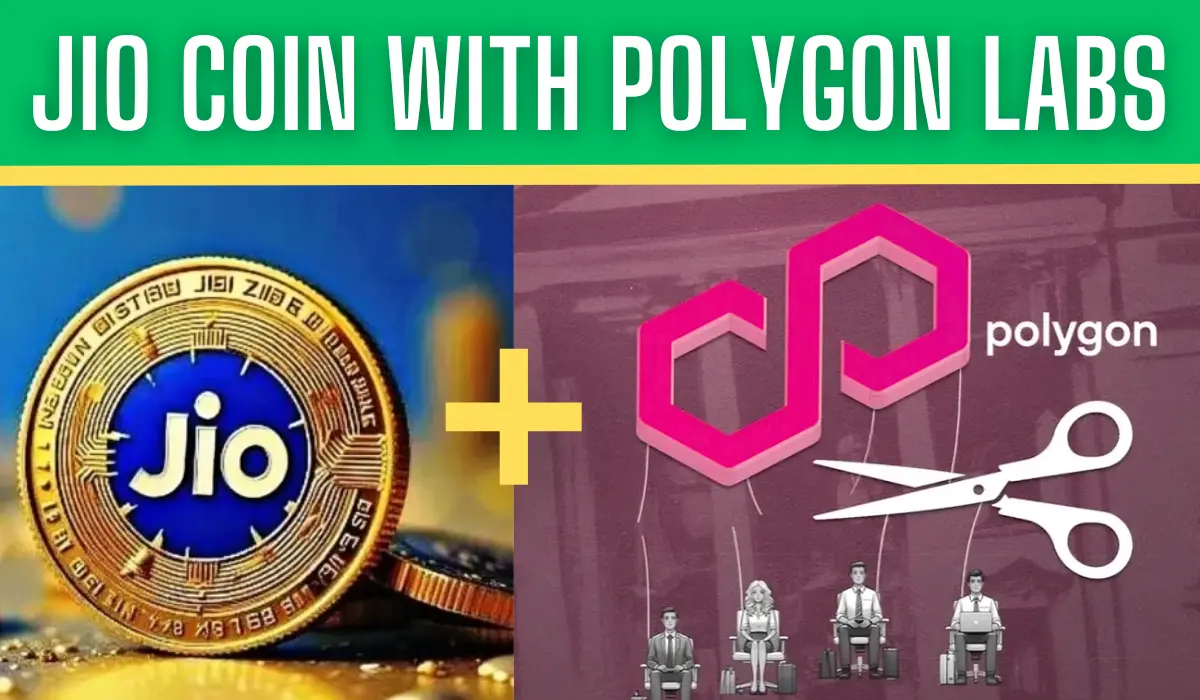
In early 2025, Reliance’s Web3 initiative took a major leap forward by partnering with Polygon Labs, one of the leading Ethereum Layer-2 scaling solutions. This collaboration underpins JioCoin—an ERC-20 reward token—on Polygon PoS, ensuring lightning-fast transactions (<2 sec), minimal fees (<₹0.05), and a roadmap for DeFi integrations.
Technical Roadmap: Early Polygon PoS integration paved the way for zkEVM bridge, unlocking Ethereum-level security and interoperability.
Business Objectives: Reliance aimed to leverage Polygon’s DeFi ecosystem—liquidity pools, staking, NFT minting—fast-tracking JioCoin’s evolution.
Pro Tip: Partnerships at blockchain scale succeed when both parties align on users, technology, and regulatory posture—Jio and Polygon exemplify this synergy.
Technical Integration: Polygon PoS & zkEVM
Polygon PoS Layer
Attribute
Specification
Consensus
Proof-of-Stake with 100+ validators
Finality
~2 seconds
Gas Fees
~0.0005 MATIC (₹0.02)
Security Anchor
Periodic checkpoints on Ethereum mainnet
Smart Contract Compatibility
Full EVM-compatible
Deployment: JioCoin contracts (mint(), burn(), transfer()) deployed to Polygon PoS by Q1 2025.
Validator Network: Polygon’s decentralized validator set secures all JioCoin reward mints, burns (10 % on redemption), and transfers.
zkEVM Bridge Planning
Feature
Benefit
Zero-Knowledge Proofs
Verifiable state transitions with minimal data
EVM-Equivalence
Run existing Ethereum smart contracts unchanged
Security
Ethereum mainnet finality & fraud proofs
Gas Efficiency
Batch proofs reduce cost per transaction
Interoperability
Seamless cross-chain JIO transfers to L2s/L1
Timeline: Alpha bridge for 10 k testers launched April 2025; full public zkEVM slated Q3 2025.
Integration Steps:
Proof Generation: JioSphere constructs zk-SNARK proof of Polygon state.
Mint on Ethereum L2: Equivalent JIO tokens minted on zkEVM chain.
Diagram (Mermaid):
flowchart LR
  A[JioSphere Wallet] --> B[Polygon PoS tx]
  B --> C[zkEVM Proof Generator]
  C --> D[Ethereum zkEVM Verifier]
  D --> E[zkEVM JIO Mint]
Smart-Contract Deployment & Audits
Contract
Audit Provider
Key Findings
JioCoin ERC-20
CertiK
No critical, minor overflow checks added
Staking v1.0
Least Authority
Added reentrancy guards, updated allowance
Bridge Alpha
PeckShield
Verified proof validation, multisig config
Multi-Sig Ownership: 2-of-3 for mint/burn; 3-of-5 for bridge validations.
Pausable Controls: All critical contracts include pause(), requiring multi-sig to resume.
Source Verification: Contracts verified on PolygonScan and Etherscan for transparency.
Performance Metrics & User Experience
Metric
JioSphere (Jan–Apr 2025)
Polygon Baseline
Daily Reward Mints
20 M
N/A
Average Confirmation
1.5 s
~2 s
Peak TPS (Reward Window)
5 k+
7 k+
Avg. Fee per Redemption
₹0.01
₹0.02
UX Delays
<2 s
<3 s
Seamless UX: Users experience immediate balance updates (<2 sec) when redeeming JioCoins in JioSphere and JioPay.
Scalability Tests: During peak festive campaigns, Polygon PoS handled 100 tps sustained for 2 hrs without congestion.
Mobile Optimization: JioSphere’s in-app web3 provider caches signed transactions to reduce latency on Android and iOS.
Pro Tip: Performance metrics should align with user expectations—sub-three-second transaction times drive higher engagement and reward redemption rates.
Security & Compliance Synergies
Aspect
Joint Measures
KYC/AML
Polygon KYC++ framework for major DEXs; Jio’s eKYC
Regulatory Reporting
On-chain data exported for audit; compliance dashboards
DeFi Access expands use cases beyond loyalty to actual financial yield.
Actionable Takeaways
Users: Install JioSphere v6.5+, claim test zkEVM tokens, prepare for cross-chain transfers.
Builders: Apply for Jio-Polygon SDK grants to create novel reward-based dApps.
Investors: Monitor liquidity mining pools on QuickSwap to earn both JIO and MATIC.
Regulators: Study this partnership as a prototype for public-private blockchain collaborations.
Expanded Frequently Asked Questions
Q1: Why did Reliance choose Polygon over other L2s?
Polygon offered proven scaling at millions of users, EVM compatibility, a robust validator network, and an existing Indian developer community—aligning perfectly with Jio’s scale and regulatory needs.
Q2: How secure is the zkEVM bridge?
The bridge uses zero-knowledge proofs verified on Ethereum L1, along with a multi-sig validator set and time-lock to prevent fraudulent state updates—ensuring high integrity.
Q3: Will JioSupernet compete with public Polygon?
JioSupernet is a dedicated enterprise chain leveraging Polygon SDK—designed for compliance use cases. It resides within the Polygon ecosystem, benefiting from shared security while offering tailored governance.
Q4: Can users participate in liquidity mining early?
Yes—once QuickSwap pools launch (Q2 2025), users can stake LP tokens to earn JIO and pool fees. Ensure your wallet is configured for Polygon PoS and has sufficient USDT/JIO.
Q5: How can developers get started with the JioSphere SDK?
Visit the official JioSphere developer portal, register for API keys, and clone the GitHub repo. Workshops and hackathons are announced quarterly under the Developer → Events tab.
All content provided on sikkaxchange.com is for informational and educational purposes only. I, Aanya, share insights and analysis regarding financial topics—particularly focusing on jiocoin—to help inform your decision-making. However, please note that none of the content on this website should be considered as financial advice or a recommendation to invest. Every investment decision carries inherent risks, and I am not responsible for any market losses or financial detriments that may arise from actions you take based on the information presented herein. Always conduct your own research and consult with a qualified financial advisor before making any investment decisions.